
Home physiotherapy for seniors
Why choose home physiotherapy?
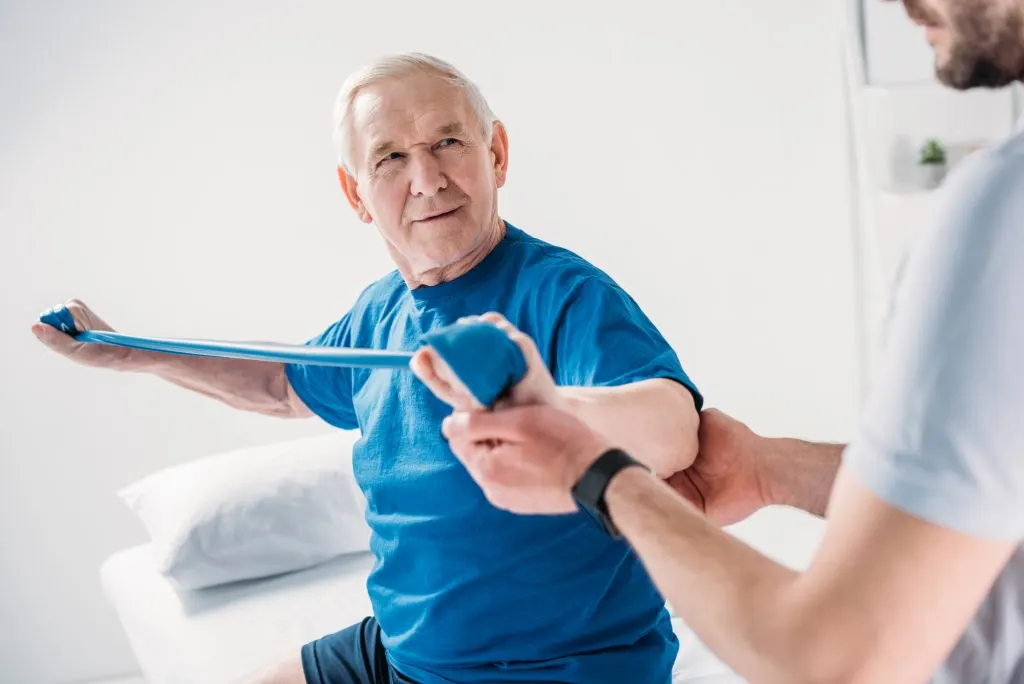
Home physiotherapy enables older adults to maintain their mobility and independence without the stress of travelling. Our physiotherapists come to your home, at your pace, to maintain walking, balance, and everyday movements.
Stay independent at home
Prevent falls
No tiring travel
Treatments tailored to your profile

Geriatric physiotherapy

Home Care and Independence
Neurological physiotherapy
Vestibular physiotherapy: dizziness and balance disorders
Physiotherapy for Rheumatology
Browse all our treatments
How does treatment work?
Online appointment booking
In-home assessment
Personalised treatment plan
Follow-up and progress
Resources & advice

Therapeutic walking

Dizziness and older adults
Browse all our articles
Questions you might have
What geriatric services do physiotherapists provide at home?
Aging is often accompanied by a progressive loss of muscle strength, balance, and coordination, increasing the risk of falls and loss of autonomy. Geriatric physiotherapy at home aims to counteract this decline by intervening directly where the patient lives, allowing for realistic and effective care.
Sessions focus on strengthening the lower limbs (quadriceps, calves, glutes), improving static and dynamic balance, and gait training. The physiotherapist also assesses fall risks in the home and provides practical recommendations: removing rugs, installing grab bars, and improving lighting.
For individuals suffering from osteoarthritis, neurological pathologies, or deconditioning after hospitalization, care is adapted to each individual’s abilities and exercise tolerance. The goal is to preserve or restore independence in activities of daily living: getting up from a chair, moving around the apartment, accessing the bathroom, or leaving the home.
How does home physiotherapy help prevent falls in older adults?
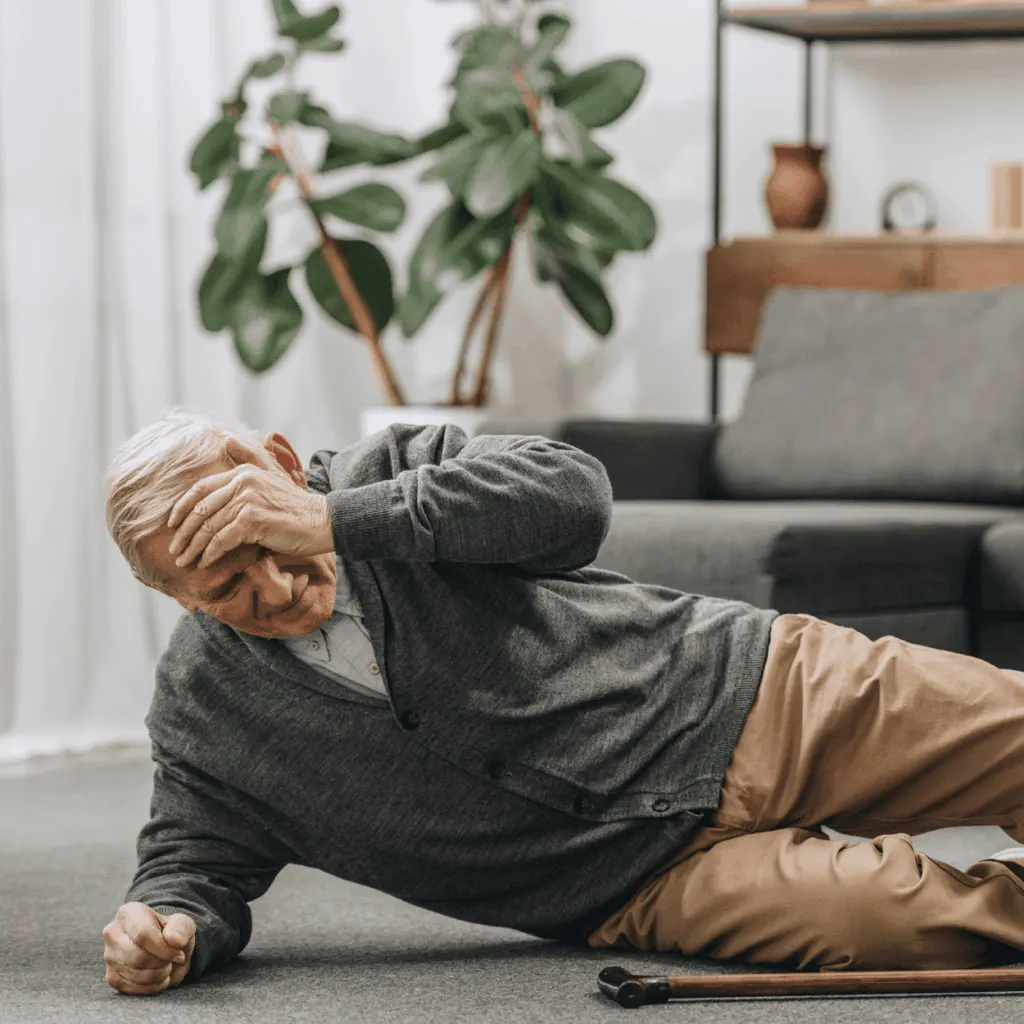
Falls are one of the leading causes of hospitalization and loss of independence among seniors. Preventive home physiotherapy helps identify and address risk factors before an accident occurs.
The physiotherapist assesses balance and strength using standardized tests (Berg Balance Scale, Mini-BESTest, single-leg stance test) and identifies deficits to be corrected. A personalized program is then put in place: aerobic and muscular conditioning, strengthening exercises for stabilizing muscles, proprioceptive training through multimodal balance exercises, and gait training on various types of terrain.
At the same time, the physiotherapist inspects the home and recommends targeted adjustments: removing obstacles on the floor, installing grab bars in the toilet and shower, and adjusting furniture height. Together, these measures significantly reduce the incidence of falls and help maintain the patient’s confidence in their daily movements.
How does home-based vestibular rehabilitation treat dizziness?
Dizziness and balance disorders of vestibular origin—such as benign paroxysmal positional vertigo (BPPV), vestibular neuritis, or compensation after a unilateral vestibular deficit—can be effectively treated with physiotherapy. At home, this care has the advantage of taking place in the environment where symptoms actually occur, which promotes more targeted rehabilitation.
For BPPV, the physiotherapist performs canalith repositioning manoeuvres (Epley manoeuvre, Semont manoeuvre), which often resolve the problem in one or a few sessions. For chronic dizziness or vestibular compensation, a programme of specific exercises is implemented: gaze stabilisation exercises, gait training with head movements, and balance exercises on different surfaces.
These exercises aim to stimulate the plasticity of the central nervous system and optimise vestibular compensation, i.e., the brain’s ability to compensate for the deficit using visual and proprioceptive information. Progress is generally gradual; regular follow-up is essential to adjust the programme and support the patient towards improved stability and quality of life.
What is home-based maintenance physiotherapy and when is it recommended?
Unlike intensive, time-limited rehabilitation, home-based maintenance refers to ongoing physiotherapeutic follow-up for individuals who, due to a chronic health condition, require periodic care to preserve their functional abilities. It is based on long-term support rather than recovery.
Typical beneficiaries include elderly individuals experiencing a progressive loss of independence (sarcopenia, balance disorders, advanced osteoarthritis), patients with progressive neurological diseases (Parkinson’s disease, multiple sclerosis), individuals with a permanent disability, and patients with chronic conditions requiring regular monitoring and adjustments.
Maintenance sessions include exercises tailored to the patient’s condition, joint mobilization, balance and coordination work, as well as monitoring of functional changes. The physiotherapist regularly adjusts the program based on clinical progress and shares observations with other healthcare professionals involved in the patient’s care. This follow-up aims to slow functional decline, preserve independence for as long as possible, and maintain quality of life at home.
Is home physiotherapy covered by basic insurance?
Basic insurance covers physiotherapy once a doctor has issued a prescription. After 9 sessions, an invoice is issued and sent directly to your insurance company.
The costs related to your physiotherapist’s travel to your home are covered by your basic insurance, provided the prescription includes the mention “at home.” Your health insurer settles the sessions after deducting your annual deductible and your co-payment.
If you have any uncertainty about your specific coverage, we recommend contacting your insurer before starting treatment, to avoid any unpleasant surprises.
Why am I experiencing dizziness?
The word “dizziness” covers very different sensations: the room spinning, instability when walking, lightheadedness, or visual blurring as soon as one moves. These nuances matter: how the disorder is triggered, its duration, and accompanying symptoms already strongly point toward a diagnosis.
The most frequent causes we treat:
- BPPV (benign paroxysmal positional vertigo): short bouts of rotatory dizziness triggered by a change in position—lying down, turning over in bed, or lifting the head. These are the well-known “crystals” displaced in the inner ear canals.
- A vestibular deficit (vestibular neuritis, following infection or surgery): one inner ear sends less information to the brain, resulting in lasting instability and visual blurring during movement.
- Ménière’s disease: vertigo attacks associated with tinnitus and fluctuating hearing.
- Vestibular migraine: dizziness and hypersensitivity to movement, with or without headaches.
- Persistent Postural-Perceptual Dizziness (PPPD): a sensation of swaying that becomes long-term, often following an acute episode.
- More rarely: cervical origin, central (neurological) involvement, post-concussion effects, neuro-functional disorders, side effects of certain medications, or simply age-related changes in balance.
The assessment carried out at the Carouge centre serves precisely to distinguish between these causes. Oculomotor examination under videonystagmography, the vHIT test, and diagnostic maneuvers allow us to identify the affected ear—and often the specific canal—or to rule out a vestibular origin.
Certain conditions do not fall under rehabilitation: dizziness accompanied by speech difficulties, limb weakness, double vision, or an unusual and sudden headache requires immediate medical advice. When the assessment reveals signs outside our scope, we will refer you to your doctor, an ENT specialist, or a neurologist.
Can my dizziness really be treated with physiotherapy?
This is the most common question at the centre, particularly when symptoms have lasted for several weeks or months. Vestibular rehabilitation is not a comfort treatment: it is a validated form of care that works through three different mechanisms, depending on what the assessment reveals.
Repositioning maneuvers. When the diagnosis is BPPV, targeted maneuvers (Epley, Semont, barbecue roll… depending on the affected canal) move the otoconia to a location where they no longer trigger vertigo. The effect can be rapid, provided the diagnosis correctly identifies the ear and canal involved.
Vestibular compensation. When one inner ear is functioning less effectively, the brain can learn to rely more heavily on the other ear, on vision, and on the information coming from the feet and neck. This relearning does not happen spontaneously: it is stimulated through progressive, repeated exercises — gaze stabilization, walking with head movements, and increasingly challenging balance situations.
Habituation. In cases of chronic instability and movement hypersensitivity, graduated exposure to the situations that trigger symptoms gradually reduces the reaction, much like desensitizing an overly sensitive alarm.
An important point: how long you’ve had symptoms is not an obstacle. It is not uncommon for the centre to see patients who have been living with instability for a year or more, and for whom rehabilitation still proves beneficial. That said, not all dizziness falls within the scope of physiotherapy — it is the assessment’s role to determine this honestly, right from the first session.
How Many Vestibular Rehabilitation Sessions Will Be Needed?
We prefer not to promise a standard timeframe: two patients with the same diagnosis may progress very differently depending on their age, medical history, activity level, and how long they have experienced symptoms. What we can outline, however, is the framework of our approach.
The care pathway begins with a 45-minute assessment. This evaluation determines the treatment strategy and, with it, a realistic estimate that your physiotherapist will share with you at the end of the session. Follow-up care is then generally scheduled at a rate of two 30-minute sessions per week, a pace that best supports steady progress without overloading the system.
A few general benchmarks, though not a guarantee: typical BPPV may respond within one to three sessions, but certain forms—such as bilateral posterior canal, horizontal canal, or recurrent cases—require more time. A vestibular deficit following neuritis, chronic imbalance, or 3PD (PPPD) generally requires several weeks of rehabilitation, with measurable progress from session to session.
In practical terms, a physiotherapy prescription typically covers 9 sessions. If your condition requires further treatment, your physiotherapist will prepare a progress report for your doctor to renew the prescription—we will manage this communication on your behalf.
Is it normal to experience more dizziness during or after exercises?
This is probably the reaction that causes the most concern, yet it is an integral part of the treatment. A repositioning maneuver often triggers distinct dizziness or vertigo at the moment it is performed: this indicates that the otoconia are moving. Similarly, habituation exercises intentionally reproduce, in small doses, the very sensation you are trying to avoid.
What we monitor is therefore not the complete absence of symptoms, but their recovery curve: after a properly calibrated exercise, the sensation should decrease within a few minutes to tens of minutes, and you should return to your baseline level before the next exercise. Temporary fatigue or mild nausea in the hours following an initial session are also common.
Conversely, certain signs should prompt you to adjust the exercises or contact us: symptoms that remain intense for several hours, nausea that prevents you from eating, noticeably worsened unsteadiness the next day, or the onset of new symptoms (unusual headaches, visual or hearing disturbances). In such cases, the dosage is too high, and we will adjust it.
Finally, a common misconception should be cleared up: triggering severe dizziness does not accelerate recovery. Mild symptom provocation is beneficial; excess is counterproductive. The right exercise is one that you can perform consistently every day.
What can I do at home to speed up my recovery?
Vestibular rehabilitation relies heavily on what takes place between sessions. Two 30-minute appointments per week are not enough on their own: short, regular daily repetitions drive adaptation. That is why each patient leaves the clinic with tailored exercise sheets that have been thoroughly explained and practiced with the therapist beforehand.
The most frequently asked questions and our general guidance:
- Should I avoid moving my head? Unless specific instructions are given following a repositioning maneuver, no. Avoidance tends to sustain symptoms rather than relieve them.
- Can I return to sports? Generally yes, progressively—starting with walking, then moving on to activities in stable environments before engaging in sports involving rapid changes of direction.
- Can I drive? As long as sudden bouts of vertigo may occur, no. Resuming driving should be discussed with your therapist and physician.
- Do I need to sleep in a specific position? After a successfully treated classic BPPV, this is generally not required. If specific guidelines apply to your situation, they will be given explicitly and for a limited duration.
Several everyday habits also promote compensation: maintaining adequate hydration, getting consistent sleep, limiting alcohol consumption, and—in cases of vestibular migraine—identifying triggers. Finally, if you fear falling, ensure your home is safe (night lighting, removing loose rugs, bathroom grab bars): the fear of falling significantly hinders recovery, and it can also be addressed in therapy.